Evaluation question 7: looking back at your preliminary task, what do you feel you have learnt in the progression from it to the full product??

Just from the picture above, it should be clear to see my leap of progress from preliminary to final piece. As the preliminary task was done with no research or no planning, I didn't really know what I was doing. I think it's fair to say enthusiasm got the better of me, and one valuable lesson I learnt was the importance of planning. Jumping in straight at the deep end made my preliminary piece look unprofessional and shoddy. Another key lesson to learn was codes and conventions, not just of horror, but of good film in general. The preliminary task shows a blatant disregard for all aspects of film (whether it be framing, acting or editing, it lacked them all).
My technological proficiency has also greatly improved, further ensuring I will never reproduce a work of that quality again. I can now film and edit to a reasonable standard thanks to extensive planning and practising.
I did no market research for the preliminary task so I never got the chance to learn a big (but ultimately depressing) lesson of the media industry: everything is a product. Everything has a target audience, and arguably exists only to make money. With no such direction behind it, the preliminary task was clearly lacking.

Evaluation question 6: What have you learnt about technologies from the process of constructing this product?

1) MS Paint - An image editor, paint was key to the success of this blog. Although basic, it fit my needs perfectly. If ever I needed an image putting together (such as the moodboard, the chart above or a print screen), I opened up paint. By the end of the task, I was proficient enough that I could put together what i wanted with no real effort or trouble at all.
2) Windows Movie Maker - Although my time spent with this software was not pleasant, by the end of my time editing , I believe I could edit quite well. I learnt how to perform basic, but vital tasks, such as cutting up clips, audio editing, adding music, titles and transitions. All of this greatly improved my ability in using technology.
3) Google - As the worlds largest search engine, it became invaluable to me during the production, especially during the research stages. I could type in whatever I was looking for and find a vast array of answers waiting to be used. This greatly improved the overall quality of my blog.
4) Facebook - Social networking such as Facebook means keeping on contact with people and sharing information / media with them is easier than ever. I took advantage of this by sending out my finished film, and collecting their replies. This greatly helped my evaluation, as being able to keep in touch with your audience is an important lesson to learn.
5) Blogger - This blog has allowed to display all my work in a clear and concise manner. It means that anyone can access my work as long as they can connect to the internet, another way that rising technology can share information and ideas.
6) Youtube - This is the largest video hosting website in the world. It is estimated it would take one person 170,000 years to watch all the videos stored there. So there's a wealth of footage out there ready to help me with my research and planning. By watching existing videos (both actual horror films and previous A level efforts), I could identify codes and conventions, see what was done well, and use that to influence my own work. As well as this, once mine was done, I uploaded it to Youtube so that I could show people in a quick and easy way.
7) Slideshare - This allowed me to upload powerpoint presentations from my hard drive to the internet, and then embed them on this blog. It ensured my blog was not as text heavy as it could have been, and was an effective way of showing collective amounts of visual data (for example, my audience feedback)
8) Camcorder - Coupled with a tripod, this was my equipment for filming. Thankfully, it was simple to use, and after a short amount of time I could work it with ease. It was also simple to connect it to the computer and upload the files.
Evaluation question 5: How did you attract/address your audience?
 I would attract my audience in a number of ways. Firstly, i would create an informative, but eye-catching poster advertising my film. This would draw people in, and make them interested and going to see them. I would utilise new media technologies to promote my film. For example, i could create a fan page, or an event on Facebook, so people are more aware of it. This would appeal to my target audience as well, as most of them use Facebook on a regular basis. Trailers would be posted on YouTube, and also in theatrical showings of similar films. This would ensure advertising is effective, as it target people who are more likely to take notice, as they already have an interest in that particular genre. I would also put my film out to film festivals to reach more people.
My film asks they audience to put themselves in the position of the characters they see on screen. This instantly builds a connection, and the viewer feels far more rewarded after watching.
Hopefully, my audience are attracted to the film purely because they like what they see. By sticking to the codes and conventions of horror as much as I could, I aimed to have created a piece that would entice people into viewing it. Through my audience research, I knew what my audience wanted, and so I was able to better satisfy those needs.
I researched why people enjoy horror films, and I found out that potential viewers are happy to be unhappy (http://www.sciencedaily.com/releases/2007/07/070725152040.htm)
This gives me free reign to be as uncompromising in my approach to film-making as possible, and still be assured that my audience would appreciate it.
Evaluation question 4: Who would be the audience for your media product?

As previously established, my target audience is both males and females, aged 15 - 35. By researching on http://www.IMDB.com , I concluded that that was the age range most likely to go out and watch a horror film. Clearly, they are horror fans as that's what my film is. They would go and see my film as they would be able to make a connection between my film and other existing films that are similar in genre. To a certain extent, the audience is represented within my film. (Teenagers). This would allow them to form a connection to the film.
Evaluation question 3: What kind of media institution might distribute your product and why?
The primary agenda of the distributor is to convince the exhibitor to rent, or "book", each film. To this end the distributor usually arranges industry screenings for exhibitors, and uses other marketing techniques that will make the exhibitor believe they will profit financially by showing the film. They have to ensure that a film is worth investing in, and that it would make them their money back, and then profit.
I think my horror film would likely be an independent feature, as the low budget quality and precise sub-genre would probably ensure it only reaches a niche (but passionate and dedicated) fan base. So i would need an independant complany to distribute it. After looking around the internet, i stumbled across "Brain damage films" (http://braindamagefilms.com/about/). This company specialise in distributing independent horror films, so that would be appropriate.

An example of one of their films.
But to try and get my film across to as many people as possible, I would show it in film festivals. In fact, there's a horror film festival in my home town of Nottingham (http://www.mayhemhorrorfest.co.uk/), so that would be a good place to go. My film would also get a release in specialised cinemas, and hopefully even some mainstream ones too.
I think my horror film would likely be an independent feature, as the low budget quality and precise sub-genre would probably ensure it only reaches a niche (but passionate and dedicated) fan base. So i would need an independant complany to distribute it. After looking around the internet, i stumbled across "Brain damage films" (http://braindamagefilms.com/about/). This company specialise in distributing independent horror films, so that would be appropriate.
An example of one of their films.
But to try and get my film across to as many people as possible, I would show it in film festivals. In fact, there's a horror film festival in my home town of Nottingham (http://www.mayhemhorrorfest.co.uk/), so that would be a good place to go. My film would also get a release in specialised cinemas, and hopefully even some mainstream ones too.
Evaluation question 2: How does your product represent particular social groups?
In the opening sequence, the only group represented are middle class teenage boys. He is dressed in jeans, t-shirt and a cardigan(?), a look not atypical of that group. So I wanted an look that was instantly recognisable and realistic, and I think I achieved that. Throughout the film, he is dazed and confused, and ultimately vulnerable. This is shown by his facial expressions, and use of close ups to fully understand his pain.

His character is being psychologically pulled apart both mentally and physically (physically via the tooth and the oozing, and mentally via his breakdown at the end). The whole film contains subtle references to dichotomy (the two symmetrical apples and plates, the mirror, the lights flicking constantly between on and off at the end).
I think this could particularly resonate with the youth of today, as in this increasingly media saturated world it seems more difficult to acquire and maintain a solid identity, and in a way, this film represents that.


His character is being psychologically pulled apart both mentally and physically (physically via the tooth and the oozing, and mentally via his breakdown at the end). The whole film contains subtle references to dichotomy (the two symmetrical apples and plates, the mirror, the lights flicking constantly between on and off at the end).
I think this could particularly resonate with the youth of today, as in this increasingly media saturated world it seems more difficult to acquire and maintain a solid identity, and in a way, this film represents that.
Evaluation question 1: In what ways does your media product use, develop or challenge forms and conventions of real media products?
In the creation of a horror film, I tried to stick as closely to the codes and conventions of existing horror products. This was aided by my research into the genre before I began planning my own. I learnt the importance of close ups, to convey emotion and establish a connection with the character. I used dark lighting to add a sinister atmosphere, and to hint that there might be something lurking in the shadows after all. I used dark, atmospheric music throughout, with no dialogue. This is common for horror, as more importance is placed on building tension and unease than character and plot, at this stage anyway. The POV shot where the protagonist is exploring his surroundings is an example of the way horror films create mystery. This powerpoint shows a few ways how I stuck to codes and conventions:
I tried to stick to the convention as much as I could, without any concious effort to subvert the genre. My reasoning was that in terms of this piece of coursework, it would be easier to gain marks by making it obvious how and why I'm doing everything. The only thing that could be a bit different is the age of the protagonist. Usually, they are either young children, older teenagers or adults. I could be wrong, but as far as I'm aware, it's rare for a 16 year old to be the protagonist of a horror film.
As well as horror, I referenced other media products by paying homage to one of my biggest inspirations in filmaking, Quentin Tarantino (http://www.imdb.com/name/nm0000233/). Firstly, "Big Kahuna productions" is a reference to the Big Kahuna franchise which is a reoccurring gag in his films. More obviously I included one of his trademark shots, the "boot shot", where the camera is in the position of the boot (or in my case, cupboard), looking straight up at the characters. This chart shows how my shot fits in amongst his:

Codes
The film also has an underlying religious theme to it, common within my sub-genre. This is evident in a few ways, the apples representing sin. Clearly evil is afoot. The drinking scene, where the water changes colour is a light nod towards the water into wine miracle. the opening couple of shots where the protagonist wakes up and emerges is not unlike the birth of man.
The film also has an underlying religious theme to it, common within my sub-genre. This is evident in a few ways, the apples representing sin. Clearly evil is afoot. The drinking scene, where the water changes colour is a light nod towards the water into wine miracle. the opening couple of shots where the protagonist wakes up and emerges is not unlike the birth of man.
I tried to stick to the convention as much as I could, without any concious effort to subvert the genre. My reasoning was that in terms of this piece of coursework, it would be easier to gain marks by making it obvious how and why I'm doing everything. The only thing that could be a bit different is the age of the protagonist. Usually, they are either young children, older teenagers or adults. I could be wrong, but as far as I'm aware, it's rare for a 16 year old to be the protagonist of a horror film.
As well as horror, I referenced other media products by paying homage to one of my biggest inspirations in filmaking, Quentin Tarantino (http://www.imdb.com/name/nm0000233/). Firstly, "Big Kahuna productions" is a reference to the Big Kahuna franchise which is a reoccurring gag in his films. More obviously I included one of his trademark shots, the "boot shot", where the camera is in the position of the boot (or in my case, cupboard), looking straight up at the characters. This chart shows how my shot fits in amongst his:
Audience Feedback
AS Media coursework: audience feedback
Here's a presentation containing all my audience feedback. Generally, response was positive, which is always nice. Although, I was confronting them with my own film, so how many of them are really going to turn around and say "it's awful"?
In conclusion, the good points about the film were said to be:
- Variety of shots (specifically the cupboard shot and the hallway shot)
- Quality of acting
- Subtle use of mise-en-scene (especially the dining room set up)
- Build up of tension
The not so good points were said to be:
- Titles
- The tooth scene (it may not add anything / be necessary)
- Intrusive music. It has been suggested that the music is too much too soon, and tension would be better built if it began with no music, and built into music. However, not everyone agreed with this, as the suggestion was raised that it works better the original way.
- And of course, the fact that sometimes it's just not that easy to find a glass.
Preliminary Task
This is my preliminary task that I filmed before undergoing the main task. This was before i had any real experience in filming and editing, and it shows quite a bit. My editing wasn't very developed at this point. Also, there are sound issues that occurred when many different shots had different sound, this resulted in background noise coming through, shattering any illusion of continuity editing. Aswell as this, some lines of dialogue are hard to comprehend. I only realised this in the editing suite, and thus was unable to resolve the problem. Also, due to the layout of the room I chose to use, some shots are badly framed due to being unable to get a clear shot at times. I learnt from my mistakes, and used what i learnt to improve my final piece.
Editing

Now that filming has finished, of course editing began. I thought that if I edited at home, it would be easier as I could work in the times that I wanted to, and be away from any distractions. Turns out that was a big mistake. The only software I had available at home was "Windows Live Move Maker". As all sentences are just the same 26 characters in a different order, you could have infinite monkeys writing on infinite typewriters, and still a way of accurately phrasing the levels of contempt I hold for this software would not exist. Open importing all my unedited clips, the first thing I noticed is that there isn't a timeline to work on, something I thought was mandatory for editing software. Instead, the clips just lied at the side (where the "shelf" is on the below picture). I was expecting something more like this:

No timeline meant no quick way of adjusting sound levels, so going through each individual clip and editing that way was a real chore. I also didn't appreciate the way it decided to to corrupt files seemingly at random. This meant I had to close and re-open several times, often having to re-edit bits if I didn't save my progress every two minutes. One positive of this though could be that by re-editing, my editing hopefully would have improved. Here is a screenshot of my film mid edit.

Another of my problems with this wretched thing is the sorry excuse for a titling feature it has. Firstly, the text preview was never the same as what it actually came out as. I eventually achieved the final placement by a lot of trial and error. When it came to my title screen i came across the problem that whatever font / effect combination I tried, it looked far too amateur. There was nothing remotely horror-y I could work with unfortunately. So that is why the titles looks as out of place as they do.
When it came to looking for music, I wanted something to fit the film, but that was also copyright free. I stumbled across this website; http://incompetech.com/m/c/royalty-free/.
It was loaded with music licensed under Creative Commons (meaning I was allowed to use it my own work)
I spent a good amount of time listening to a lot of tracks until one struck me as one that could work. This happened with the piece entitled "Bump in the Night" which can be found here; http://incompetech.com/m/c/royalty-free/index.html?keywords=bump+in+the+night&Search=Search.

This piece was suitably eerie, and was exactly the dark soundscape I was looking for. From my research I learnt that a good score is key to maintaining a spooky atmosphere, and hopefully I achieved this with the help of this track.
Filming
Filming is now done, with all of it being successfully shot in one night like I planned. For the "special effects", Bovril (a truly vile beef stock thing. By far the hardest part of this whole piece of coursework was having to be in the same room as it.) was applied to Joel's nose via a wooden spoon. Although, one concern I have is that people, when watching it, will think "that doesn't look like a nosebleed". It was supposed to be a dark colour, to hint at possession easier, but I suppose I should have made that clearer. For the water blood scene, Joel took a mouthful of blackcurrant squash before taking a sip of water, so that when he spat it out back in the glass, it was coloured. I was suitably impressed as to how well that one transferred onto camera. For the tooth scene, we used a mint covered in tomato ketchup (pictured below). However, in the actual shot, the ketchup isn't really visible at all. The final scene, in which Joel collapses to the ground, is accompanied by light which keeps going from bright to dark continuously. This was achieved by myself and Tom (who was present on set helping out and taking photos) turning a couple of dimmer switches back and forth. Hi-tech stuff, I know.
I deliberately chose for filming to start at midnight. I believe that there's a certain mood (a vibe almost) present in people late at night / early morning. One that would benefit my work greatly. I feel like all of my best work is created when I'm hardly "with it". (Most of this blog has been put together in the early hours of the morning). It also allowed me to capture a genuine bleary eyed expression from my actor. We wrapped up around 3am as expected. Then it was time for a celebratory viewing of Reservoir Dogs (one of my favourite films of all time), before heading home. All in all, I'd like to think it was a successful shoot.

It begins....

Eat your heart out Tarantino.

A hungry team is not a happy team.

A face made for horror. (sorry Joel, I love you really...)

SFX

Trying to stay on top of things.

He's a braver man than I.

...It ends.
I deliberately chose for filming to start at midnight. I believe that there's a certain mood (a vibe almost) present in people late at night / early morning. One that would benefit my work greatly. I feel like all of my best work is created when I'm hardly "with it". (Most of this blog has been put together in the early hours of the morning). It also allowed me to capture a genuine bleary eyed expression from my actor. We wrapped up around 3am as expected. Then it was time for a celebratory viewing of Reservoir Dogs (one of my favourite films of all time), before heading home. All in all, I'd like to think it was a successful shoot.
It begins....
Eat your heart out Tarantino.
A hungry team is not a happy team.
A face made for horror. (sorry Joel, I love you really...)
SFX
Trying to stay on top of things.
He's a braver man than I.
...It ends.
Shooting schedule.

This is a shooting schedule I devised to ensure that filming goes as smoothly as possible, without any mistakes. I have given myself generous amounts of time as I know of complications that might occur, also much time and care is needed to ensure that I get the shots filmed exactly as I envision them.
I've decided to film my film in chronological order. Normally this wouldn't happen, but as all shots are in the same set, I thought it might be easier to do so, and easier to keep track of things.
Storyboard

(open in new tab and zoom in to enlarge) Also, for some annoying reason, the bottom three panels have been cut off.
Shot sequence
Before I storyboard, I'm going to quickly outline shot by shot what will happen in the opening to my film.
- Establishing shot of the protagonist lying on the floor, looking disorientated. This is a MCU, and is slightly tilted to highlight said disorientation. He slowly gets up.
- Cuts to a MCU of the protagonist getting up, and walking away (the camera pans to show this)
- Shot from inside a cupboard (Tarantino boot shot style) showing him take a glass out and close the cupboard again.
- The table is shown with a mysterious note written on it, he picks it up.
- Close up of his face as he is clearly confused by it.
- The note is put down.
- The camera pans as he walks around to investigate.
- POV shot of him investigating, he looks in the dining room to see a symmetrical dinner table with apples on plates and empty wine glasses (biblical references). He then looks back out down the hallway
- Shot from the other end of the hallway with the protagonist looking straight down.
- Back to the kitchen, and he takes the glass over to the sink.
- Close up of the glass being filled.
- Close up of the side of his face where he takes a drink, only to discover blood in his mouth.
- Over the shoulder shot where he spits into a sink.
- XCU of his lower face where he pulls a tooth out of his mouth.
- Cut back to sink where the tooth is thrown in.
- MLS of the protagonist walking over to a mirror, the camera pans across to the mirror.
- CU of his face and he discovers he is oozing a dark coloured substance from his nose.
- He collapses onto a sofa clutching his face.
- He falls off and starts writhing around in agony.
- CU of the side of his face while he is doing this, with his actions getting more intense.
- Cut back to the first shot of him in agony, and he lets out a scream.
- Title screen comes up.
Target Audience
I could use this to target my audience better, and reach a wider group of people. This could be achieved via advertising on social networking sites such as Facebook. I could use a viral marketing campain to promote my film. This would get people interested in it, and would reach alot of people, most importantly my target audience.

Pitch
AS media pitch
This was the pitch i presented to the class. It covers the basic ideas of my film, with everything going into more detail at a later point.
This was the pitch i presented to the class. It covers the basic ideas of my film, with everything going into more detail at a later point.
Moodboard

This mood board shows all the different themes and moods of my film. These include fear, tension, religion and of course, possession.
Location
The location of my film will be an ordinary, but nice looking house. This is because although the film deals with themes of possession, it is important to maintain some realism throughout. One of the ways horror taps into peoples minds is the idea that something extraordinary could happen to anyone. Another advantage to this is that as I am choosing to film indoors, I get full control over light and sound, something that will be very important when watching back the footage. I can imagine how frustrating it would be to look at footage after an outdoor shoot, only to discover it's been ruined by extraneous noise/light. Lighting is key to a successful horror, so being able fully manipulate that is vital. A friend of mine has kindly volunteered for his house to be used for the filming. Here is his living room, an example of the sort of set the film will have.

Audience Research


To find out what people look for in a horror film, i composed a questionnaire (crudely seen above) and handed it out to people for them to answer. I handed out 20 copies of the questionnaire to random students in my college, to ensure a good range of answers.
From my returned questionnaire, found out that;
From my returned questionnaire, found out that;
- Most people looked for suspense, realism, blood, and surprisein a horror film.
- The most common favourite sub-genre is "horror comedy"
- On average, the people i asked watch 3 films a week.
- The predominant hobbies people had was socialising with friends.
- Peoples friends opinions on media consumption can influence the person.
Although genre wise, it wasn't what i was hoping for really, I will still taken away what i learnt when it comes to finally making my own.
Horror analysis 2: The Texas Chainsaw Massacre (1974)

The viewers generic assumptions about the film are fulfilled by the opening sequence. This is down to the eerie sound effects, gore and dark lighting which are all staples of the horror genre. This means that the opening conforms to the characteristics of the genre. Mystery is created due to the showing of the dead body in the opening scene. Questions are asked about how that happened. Tension is built by small glimpses of the body from different angles. This builds until the full body is revealed in all it's decay.
The sound of the camera flash sounds creepy, and adds unease to the viewing. As well, ominous music is quietly playing in the background, adding to the tension. The sound of a news report is played over it, reinforcing the idea that it's factual. Not much is learnt about characters from the opening, as the only character is shows is deceased.
The director chooses to open the film with a speech proclaiming that what the viewers are about to witness is shocking and distressing. It does this in a very matter of fact tone, as it is based on true events. To emphasise this further, no stars are used, just unknowns. A well known actor would detract from the true story as people would already be familiar with their work. This also means that they have to obtain a unique selling point from somewhere else.
Even from the opening few minutes, it is clear the themes of this film include death and murder.
The film was directed and produced by Tobe Hooper on a budget of only $300,00. Due to the content, Hooper struggled to find a distributor. Eventually, Bryanston Pictures picked it up.
 Today, a film specialist came in to talk to us about effective film making. We arranged ourselves into groups and we all got given a camcorder and a tape. He then acted out a scene, which included a phone next to a crying person, and someone walking in, out, then back in the room, handing the other person a phone. No questions were answered, and we were told to re-create that scene via the medium of film.
As we were doing a quick job of filming, no editing was involved, so all filming was done on a stop/start basis. This meant we had to pause the tape and continue when were ready for the next shot. This means all film had to be filmed in chronological order, and made shots such as shot/reverse shot very tedious to film.
We then went back to the classroom, and all watched each others work. All our first attempts were poor, with bad framing, camera angles and continuity. We then got taught the importance of framing, and the "less is more" attitude to camera angles, as too many wierd angles can be unsettling and confusing to watch. All the first films had a lack of emotion, as not enough attention was paid to close ups. This meant that connections to the characters were not built, and the viewers lost interest.
With all this new knowlege, we all went back out and re-filmed the same shot sequence. By the time we came back again, everyones work has improved significantly, with major focus on framing and close ups. With what we learnt today, we could improve our horror films by employing these techniques into our own work.
Sub-genre
My chosen sub-genre is "possession". Perhaps the most well known example of this is the 1973 film "The Exorcist". Films of this genre play on the fear of the unknown, superstition, and the idea that evil forces exist in the world. This can work in a number of ways (spirits, demons, ghosts or witches). The characters fall to an evil force that is trying to victimise or corrupt them in some way. (e.g Blair Witch Project, in which the witch is taking vengeance for them trying to expose her)
In my research, i looked at the films that are regarded to be the best in this sub-genre, here is a list of them:
http://horror.about.com/od/horrortoppicklists/tp/Best-Demonic-Possession-Movies.htm
In my research, i looked at the films that are regarded to be the best in this sub-genre, here is a list of them:
http://horror.about.com/od/horrortoppicklists/tp/Best-Demonic-Possession-Movies.htm
Fonts

Here is an example of some typical fonts you would expect to find in a horror film. In accordance to the genre, they are quite sinister in appearance. Hopefully, I can use something similar in my final piece, to instil a sense of eeriness, and to further state my genre. As it is possession, I would look for something slightly unnerving, yet subtle.
Genre
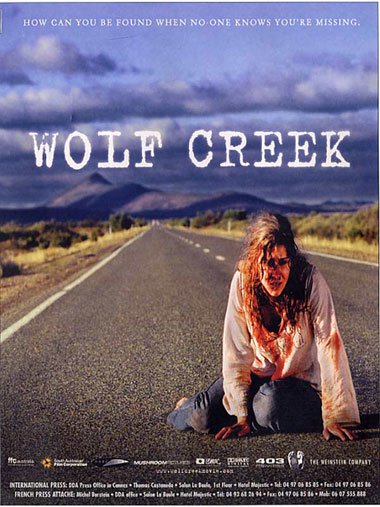
 Today, we learnt about genres and sub-genres, and the boundaries and conventions that apply to these. Genre is a strategy used by film producers to ensure audience identification with a film. This allows the audience to know what they are in for when they go to see a film. It also makes it easier for companies to market their products, as they can pick out a target audience based on that groups psychographics and demographics. Horror has many sub-genres, which are distinguishable by the codes and conventions within them. Cross genres and Hybrids exist within horror. This is when a film takes elements from more than one sub-genre to create a new one, for example a zombie comedy horror film. Examples of sub-genres in horror films include:
- Psycho - Psychological
- The shining - Psychological
- The exorcist - Religious / Possession
- Wolf Creek - True story
- The Decent - Monster/Gore
- Saw - Psychological- gore
- Texas Chainsaw Massacre - Gore / Slasher
Although I have pre-decided my genre (Possession), it is useful to take ideas from all genres of horror, to give me more of an insight as to what makes a good horror film. The trailer for Wolf Creek shows some carefree young adults on a road trip. This soon descents into disaster as the group get attacked by a figure you cannot see fully in the trailer. although it is a common theme amongst horror, I like the idea of unsuspecting people coming into contact with evil, and the consequences of that.
Horror analysis: opening 2 minutes of Nightmare on Elm Street (1984)
- Opens with an institutional logo (New Line Cinema) in red and black, which are commonly used colours in horror.
- First shots shows a characters feet which walk to, and stop next to a bag which the character then proceeds to pick up. Creepy music is playing in the background, whilst heavy breathing can be heard as well as dripping noises which indicate the setting, a dank basement type area. Low key lighting is used, with the colour red being very prevalent. All this starts to create an eerie atmosphere.
- Cuts to an overhead shot of a table with weapons on it.It is revealed that the bag also contains weapons and the character empties the contents of the bag onto the table. Only the characters arms are in shot. This adds to the mystery as the audience do not know who this person is, and are eager to know so.
- Cuts to a medium close up of the characters hands grabbing a glove off the table.
- Cuts to a shot of the character fiddling with tools. This is an enigma code as the audience do not yet know what he is planning / what is going to happen. Credits start appearing at the bottom of the screen
- 5 more shots are shown of the process of the character assembling tools, with the shot times getting shorter, to create excitement.
- Cuts to a close up of the characters hand, but with a metal glove on as it is revealed that the glove was what he was working on. A credit appears beneath to show who made the film (Wes Craven)
- Cuts to an overhead view of the hand fully extended, and it is shown that the glove contains metal spikes for fingers.
- Cuts to a black screen, with only the films title being shown using the red and black colour scheme.
- A creepy riff comes in on the music, as it cuts to the glove being shown behind some fabric, which it then rips through. A scream is also heard. This leaves no doubt to the role of the character as a murderer.
- Cuts to a medium shot of a woman (presumably the victim) running into centre frame against a white background. This could be used to represent purity and innocence, character traits often shown in these types of characters.
- Cuts to a close up of the woman, who is looking very distressed about something.
- Cuts to a long shot of the woman running towards camera, down a gloomy tunnel. Light is coming from the other end, and she is running into darkness. She is constantly checking her surroundings, giving off the impression that she is running from something. As she gets nearer to the camera, an actors name appears on the bottom left of the screen. The music stops, leaving no sound but ambient background noise remaining.
- She stops as it cuts to a close up of her face. the right side of it is covered by darkness.
- Cut to a medium shot of her still anxiously looking around. She turns around and the camera zooms in on the back of her head, with more cast names appearing on the right hand side.
- She then turns around dramatically as it cuts to a sheep running down the tunnel, accompanied by animal noises and laughter.
- Cuts back to the woman, who gasps and runs out of frame.

What i find effective about this opening is the use of lighting to establish mood. The bleak minimal light perfectly coexists with the grim story which is just unfolding. The use of music is also good, creating a creepy atmosphere, with more layers coming to to subtly build on it, to it then cutting out completely. This leaves the viewer feeling nervous and on the edge of their seats. The framing is effective, with the close ups showing unease, and the long shot signifying being isolated and alone. I will remember all this, and try to incorporate it into my film when i start filming.
http://www.youtube.com/watch?v=tn_DjzN8410
(The uploader of the video has disabled the option to embedd the video)
(The uploader of the video has disabled the option to embedd the video)
Subscribe to:
Posts (Atom)